
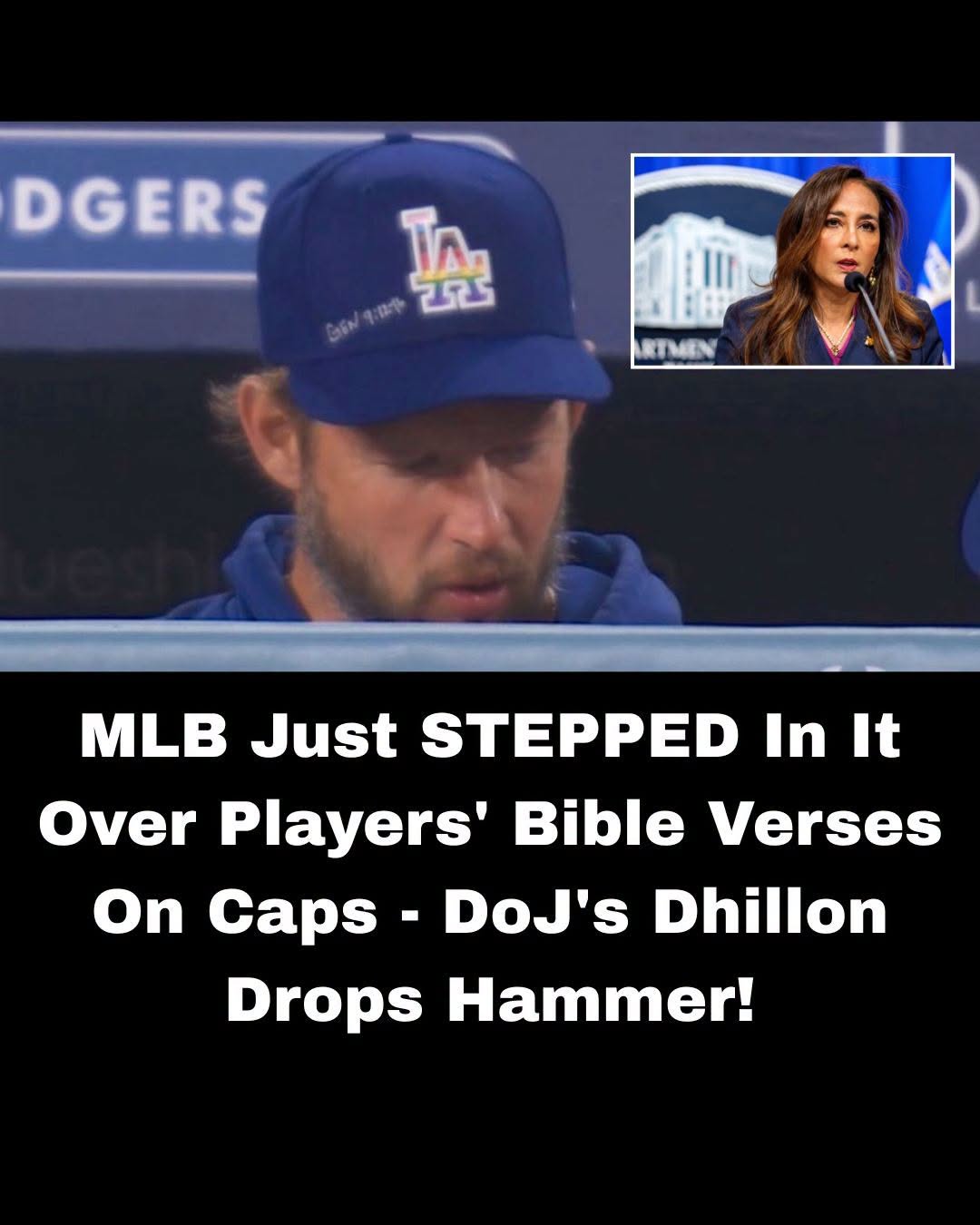
A dispute involving Major League Baseball has sparked a broader debate over religious expression and league policies after three pitchers from the San Francisco Giants reportedly received warnings for writing Bible verse references on their team-issued Pride Night caps. During a game against the Chicago Cubs, pitchers Landen Roupp, JT Brubaker, and Ryan Walker inscribed references to Genesis 9:12-16, a passage describing God’s covenant with Noah and the rainbow as a sign of that promise. According to MLB officials, the writing violated league equipment regulations, prompting the players to receive warnings consistent with standard procedures.
The league’s chief communications officer, Pat Courtney, stated that the issue involved unauthorized modifications to team-issued equipment rather than the content of the verses themselves. However, the decision quickly drew criticism from several Republican leaders. Vice President JD Vance commented on social media, while Senator Josh Hawley sent a letter to MLB Commissioner Rob Manfred seeking clarification about the league’s policies and questioning whether religious expression was being treated differently from other forms of messaging.
Supporters of the players argued that referencing Scripture represented a personal expression of faith and should not be discouraged. Some critics of MLB contended that the league has embraced certain social messages while enforcing rules against others, raising concerns about consistency and fairness. Others pointed out that professional sports organizations routinely maintain policies governing uniforms and equipment to preserve consistency and avoid unauthorized alterations, regardless of the message involved.
The controversy reflects a larger national conversation about the intersection of religion, personal expression, and organizational rules. As debates over cultural and social issues continue to influence sports and public life, incidents like this often generate strong reactions from both supporters and critics. While Major League Baseball has maintained that its response was based on existing regulations, the discussion has expanded beyond baseball, touching on broader questions about free expression, faith, and how institutions balance individual beliefs with established policies.