
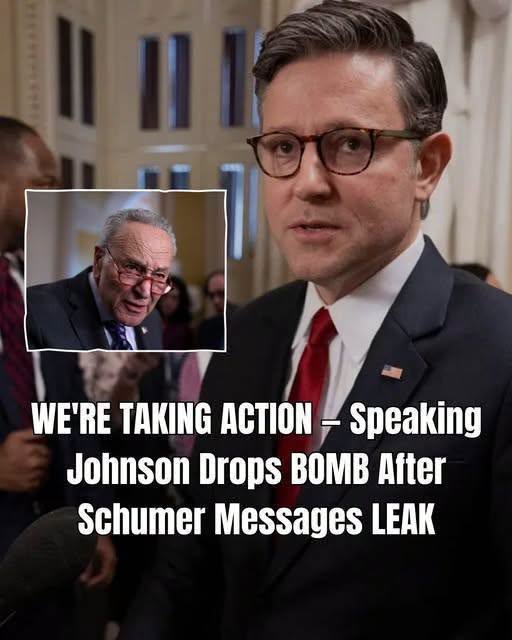
House Speaker Mike Johnson said Thursday that Senate Democrats bear responsibility for the ongoing government shutdown, arguing that their refusal to support a temporary funding measure has forced the administration to make difficult decisions about federal operations. Johnson pointed specifically to Senate Minority Leader Chuck Schumer, claiming that the current situation could have been avoided if lawmakers had reached an agreement on a seven-week stopgap spending bill. With no resolution in place, federal agencies have begun implementing contingency plans, including delays in certain payments and preparations for reduced services.
The comments came as President Donald Trump announced plans to meet with Office of Management and Budget Director Russ Vought to review federal agencies and programs that could face budget reductions. In a social media post, Trump said the discussions would focus on identifying programs he believes are unnecessary and determining whether potential cuts should be temporary or permanent. The president characterized the situation as an opportunity created by the current impasse in Congress and suggested that certain government agencies require significant reform.
According to administration officials, federal departments have already begun following shutdown procedures. Some programs have been temporarily paused, while agencies are reviewing spending priorities in line with White House directives. Reports indicate that billions of dollars in funding connected to New York City subway infrastructure projects have been frozen under policies implemented by the Office of Management and Budget. Officials continue to evaluate which functions are considered essential and which programs could be reduced or delayed while funding remains unresolved.
Johnson defended Vought’s role in the process, describing the task of determining essential programs and personnel as a difficult but necessary responsibility during a shutdown. He emphasized that the Office of Management and Budget traditionally performs this function whenever the government experiences a lapse in funding. As negotiations remain stalled, both parties continue assigning blame while millions of Americans await a resolution. The standoff highlights the ongoing divisions over federal spending priorities and raises questions about how long agencies can maintain operations before broader disruptions begin to affect citizens and government employees nationwide.