
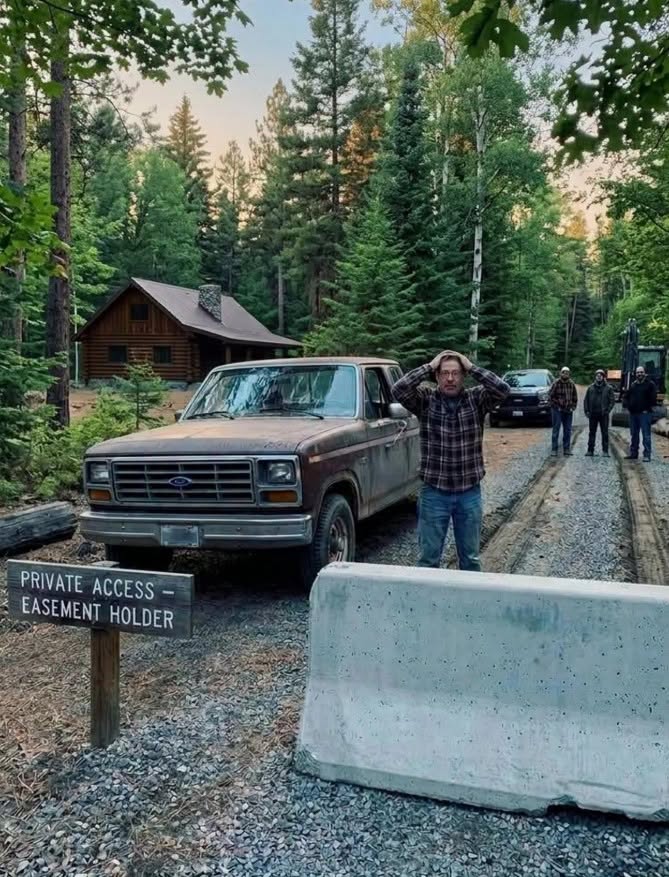
Watching a demolition crew remove a concrete structure that had blocked access to my home for nearly two months was less about victory and more about relief. As the concrete broke apart and the road slowly reappeared, I was reminded that protecting what you’ve worked hard to build is sometimes necessary, even when it requires difficult conversations and legal action. What had once been a quiet gravel driveway leading to my cabin had unexpectedly become the center of a property dispute that tested both my patience and determination.
For more than a decade, I had maintained my rural property with care, investing time and resources to preserve the land and the road that provided safe access to my home. When new neighbors purchased the adjoining parcel and began construction plans, I welcomed the change without concern. That changed when I returned home one day to discover that a newly poured concrete foundation had been built directly across my driveway, preventing vehicle access to my property. What initially appeared to be a misunderstanding soon revealed itself to be a much more serious issue involving inaccurate assumptions about property boundaries.
After consulting a property attorney and reviewing official land records, it became clear that the structure had been built entirely within the boundaries of my property. Attempts to resolve the matter amicably were unsuccessful, and legal proceedings ultimately became necessary. The court ordered the obstruction to be removed after determining that maintaining access to private property—and ensuring emergency services could reach it—was a matter of both legal and practical importance. When the required actions were not taken within the court’s deadline, arrangements were made to restore the roadway in accordance with the ruling.
Today, the familiar gravel road once again leads safely to my home, serving as a quiet reminder of the importance of respecting boundaries and protecting one’s rights responsibly. Property ownership carries both privileges and responsibilities, and clear communication, proper surveys, and adherence to legal requirements benefit everyone involved. Sometimes, standing your ground is not about winning a dispute—it is about preserving the place you call home and ensuring that years of hard work remain protected for the future.