
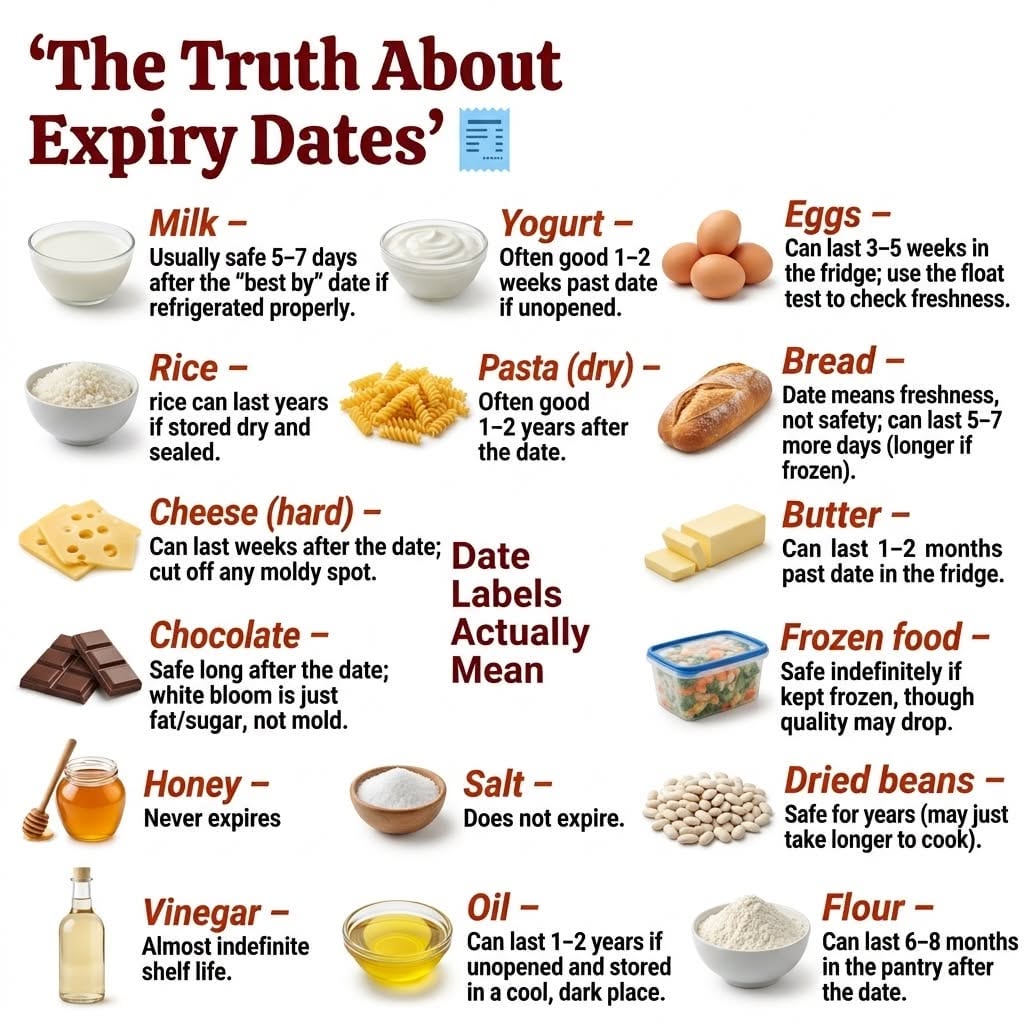
Many people assume that the date printed on food packaging is an exact indicator of when a product becomes unsafe to eat. In reality, most food labels are intended to provide guidance about quality rather than food safety. Terms such as “Best If Used By,” “Sell By,” and “Use By” often refer to when a product is expected to offer its best flavor, texture, or freshness. Understanding the purpose of these labels can help consumers make more informed decisions and avoid discarding food unnecessarily.
For many shelf-stable and refrigerated products, proper storage and careful inspection remain important factors in determining whether food is still suitable for consumption. Checking for signs such as unusual odors, changes in texture, damaged packaging, or visible spoilage can often provide valuable information. Foods that have been stored correctly may remain usable beyond their printed dates, depending on the product and storage conditions. Following food safety recommendations for refrigeration, freezing, and pantry storage can help maximize freshness while reducing unnecessary waste.
Misunderstanding expiration dates contributes significantly to household food waste. Every year, large quantities of perfectly edible food are discarded simply because consumers interpret date labels as strict expiration warnings. Becoming familiar with what these labels actually mean can help families save money, reduce waste, and make better use of the food they purchase. Small changes in shopping, storage, and meal planning habits can have a meaningful impact over time.
Taking a more thoughtful approach to food expiration dates encourages both responsible consumption and improved food management at home. By understanding food labeling practices and using proper storage techniques, consumers can confidently make decisions that support food safety while minimizing waste. Sometimes, a quick look, smell, and careful assessment are just as important as the date printed on the package.