
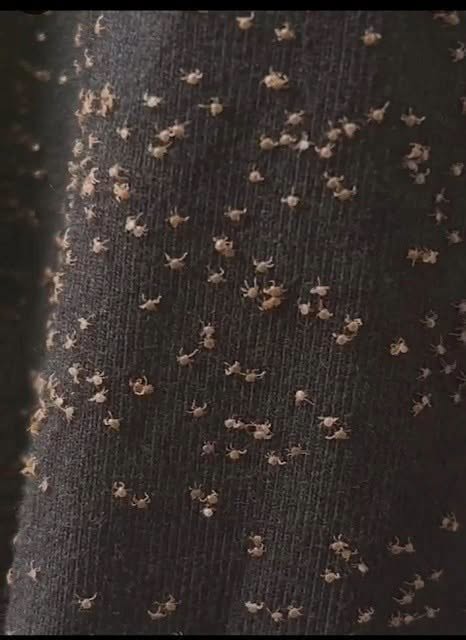
What may seem like an insignificant discovery during a walk can sometimes reveal one of nature’s most remarkable survival strategies. Imagine looking down at your clothing and noticing a cluster of tiny objects clinging to your pant leg. At first glance, they might appear to be bits of dirt or debris picked up along the trail. Upon closer inspection, however, they are actually burrs and seed pods—small but brilliantly designed structures that help plants travel far beyond where they first grow. What begins as a minor inconvenience quickly becomes an opportunity to appreciate the hidden ingenuity of the natural world.
These tiny seeds play an important role in plant reproduction and survival. Equipped with microscopic hooks or textured surfaces, they are specially adapted to attach themselves to passing animals, clothing, and other materials. By hitching a ride, plants can disperse their seeds across wide areas without expending additional energy. Humans and wildlife unknowingly become partners in this natural process, helping plants establish themselves in new environments and ensuring their continued growth from one generation to the next.
Experiences like this remind us that nature is constantly at work, often in ways we rarely notice. During an ordinary walk, countless interactions are taking place between plants, animals, and their surroundings. The seeds that quietly attach themselves to our clothing demonstrate how even the smallest organisms have evolved creative and effective methods for survival. What may initially seem like an annoyance becomes a fascinating example of adaptation, resilience, and the interconnectedness of life.
After recognizing the purpose behind these tiny hitchhikers, familiar paths and grassy fields often take on new meaning. Simple moments outdoors become opportunities to observe the remarkable details hidden in everyday surroundings. Nature’s smallest creations frequently carry its greatest lessons, showing us that innovation, cooperation, and survival can be found in even the tiniest seed. Sometimes, all it takes is a closer look to discover that an ordinary walk has become an extraordinary encounter with the brilliance of the natural world.