
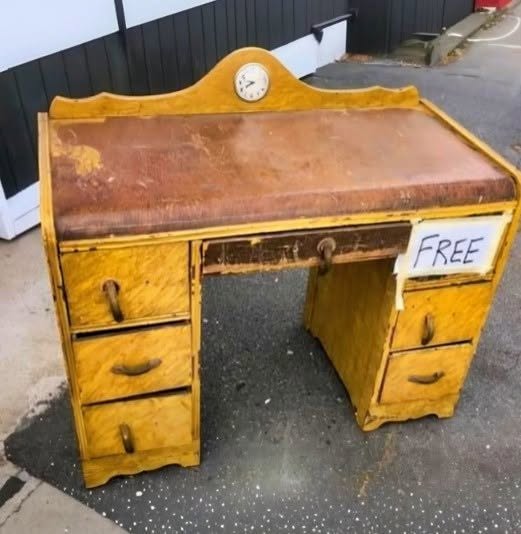
At first glance, the old dressing table appeared destined for the landfill. Covered in layers of yellow paint, scratched from years of use, and marked with a simple “Free” sign, it was easy for passersby to overlook its potential. Most shoppers saw nothing more than a worn-out piece of furniture that had reached the end of its life. Ross Taylor, however, saw something entirely different. Beneath its damaged exterior, he recognized the craftsmanship and timeless beauty waiting to be uncovered.
Rather than viewing the table as a restoration challenge, Taylor approached it as an opportunity to preserve a piece of design history. With patience and careful attention to detail, he stripped away the paint, repaired damaged drawers, and reconstructed missing elements that had long since disappeared. As each layer was removed, the original character of the furniture began to emerge. Elegant Art Deco lines, beautiful wood grain, and thoughtful craftsmanship slowly revealed themselves, transforming what once seemed ordinary into something truly exceptional.
Taylor’s meticulous restoration process reflected the care often associated with museum conservation work. Every repair honored the table’s original design while restoring its functionality and visual appeal. By the time the project was complete, the once-forgotten piece had been beautifully revived, showcasing rich walnut tones, warm mahogany accents, and a timeless elegance that commanded attention. The transformation demonstrated how skill, patience, and an appreciation for craftsmanship can breathe new life into objects that others have given up on.
The restoration quickly captured the attention of viewers online, inspiring far more than admiration for fine furniture. For many, the dressing table became a meaningful reminder that value is not always immediately visible. Whether in treasured antiques, forgotten possessions, or even within ourselves, time and care can reveal extraordinary potential hidden beneath the surface. Ross Taylor’s work serves as a beautiful example of how restoration is often about more than preserving objects—it is about recognizing the stories, beauty, and possibilities that deserve a second chance.