
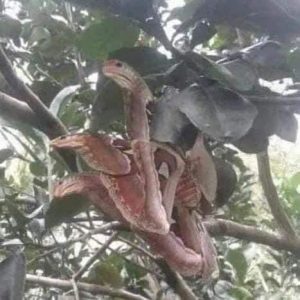
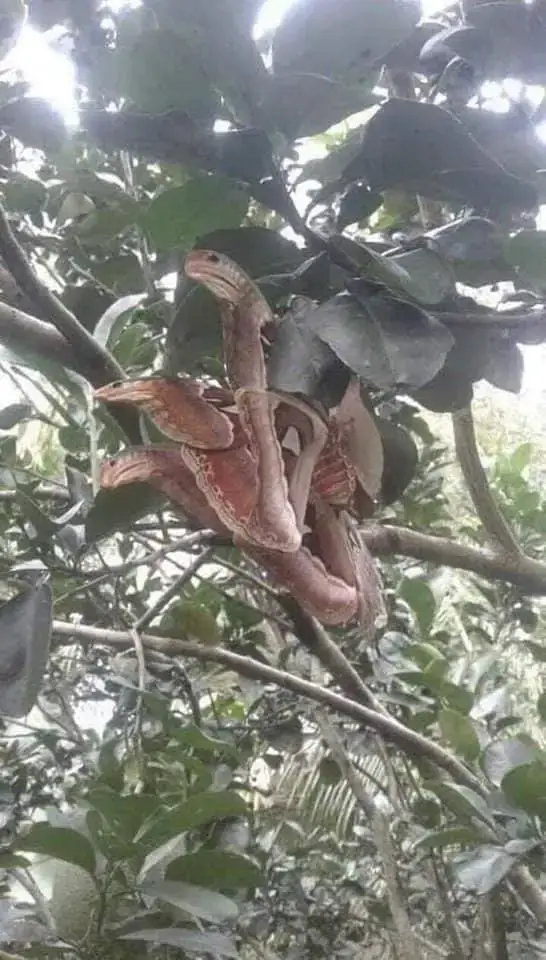
When I first saw this, I was sure it was a snake and I was startled to the core! But when I took a closer look…
The Atlas moth isn’t an average-looking moth. What makes this moth special isn’t just its wingspan, which reaches 9.4 inches, but its ability to disguise as one of the greatest predators out there, the snakes.
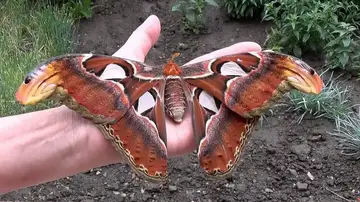
These moths are endemic to the forests of Asia and were first described by Carl Linnaeus in his 1758 10th edition of Systema Naturae.
Their wing pattern make them unique. The upper side of the wings are reddish brown with a patch of black, white, pink, and purple lines while the tips of both forewings have prominent extensions that resemble the head of a snake.
“It is impossible not to be fascinated by the atlas moth. This is due to its beauty, the detail on its wings, and its sheer size at every stage of its life cycle,” says Luke Brown, manager of the Museum’s butterfly house, and as much as we learn about this unique species the more we agree with this statement.
Even as a caterpillar, the atlas moth is quite impressive. The larvae feed constantly, storing up for the pupal and adult stages. At the same time, it produces silk similar to the product created by domesticated silkworms.
The atlas moth caterpillar feeds eats a lot if left. First, they eat their eggshell and then feed on their favorite leaves from citrus, guava, cinnamon, and Jamaican cherry trees.
A number of these moths live in captivity, such as butterfly conservatories, where they are kept at separate feeding areas. “We don’t let them roam free in the exhibition because they eat so much. This allows them to build up fat reserves for the adult to live off. If we didn’t monitor their eating, we would have no plants left in the butterfly house, so we keep them in their own feeding area while they are growing,” Brown said, as per the Natural History Museum.
By resembling a snake, the Atlas moth is widely feared by other animals and insects. It is a disguise which prevents them from being attacked and eaten. While predators realize the moth isn’t actually a snake, they are given the chance to simply fly away.
The reason for their distinctive pattern is the incredible nature of evolution and natural selection. Over the years, moths with snake-like patterns had a higher chance of survival, so they passed those genes to the next generations.
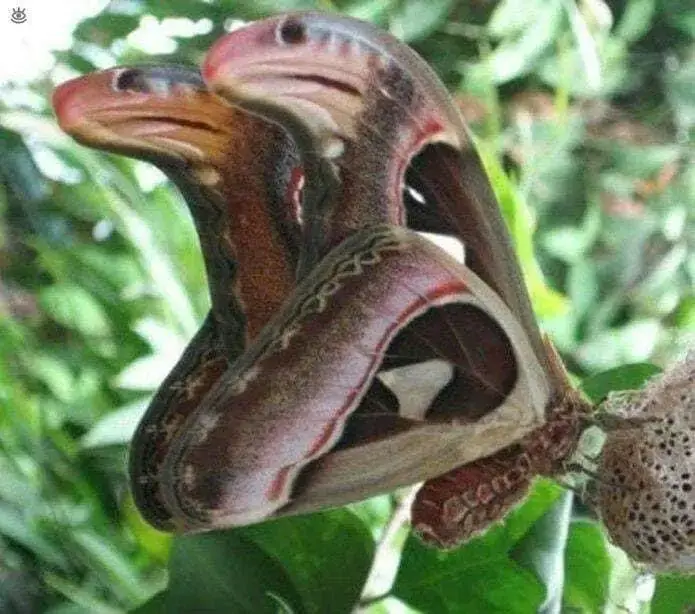
Not only predators, but humans as well can be easily fooled by these moths’ appearance.
Habitat loss and deforestation pose threat to these insects’ existence but there are plenty of conservation efforts which are essential to their survival and their unique adaptation.
What do you think of these moths? Aren’t they stunning?