
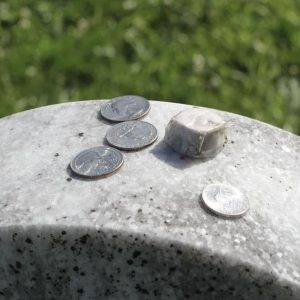
Why Do Some People Place Coins on Gravestones?
Even when a loved one is lying in a location that is open for visitors, losing a loved one is never easy. Some people miss their departed loved ones so much that they leave amazing and elaborate offerings, such as flower arrangements and, in some cases, refreshments. Coins on gravestones, however, seem to be reserved for military personnel, and veterans and their families attach great significance to this custom.
Why Place Coins on Gravestones?
The origins of the practice of placing pennies on gravestones are not entirely established. Some claim, for instance, that the custom originated in the Roman Empire. However, “there’s no reason to believe that it does,” according to Snopes. owing to “a lack of documentation.” In either case, one thing is certain. People who love them and those who serve in the armed forces make sacrifices that most people find unfathomable.
It follows that it is not unexpected that people who have served together would find a means to pay tribute to those who have passed away. There are rumors that the practice of placing pennies on gravestones dates back to the Vietnam War. It seemed safer for people to get in touch with each other when coins were placed on gravestones. “Leaving a coin was considered a more practical way to communicate that you had visited the soldier’s grave than contacting the soldier’s family, which could devolve into an uncomfortable argument over politics relating to the war, due to the political divide in the country over the war.” explains a page from the website of the American Legion.
Symbolically Showing Respect
Additionally, the custom of placing money on gravestones originated as a means for soldiers to pay tribute to their “fallen comrades” or “buy them a beer.” Interestingly, every coin has a distinct meaning.
For instance, the presence of a penny indicates that someone was there. A nickel, on the other hand, represents the individual who left the souvenir and the deceased were both in boot camp, giving it a somewhat more emotive connotation.
The dime represents teamwork, even if it is just for a few time before being transferred; the quarter, possibly the most terrifying currency of them, represents a gravestone. The quarter reveals to the departed person’s relatives that the person who left the keepsake was in fact present when they passed away.
Other Military and Monetary Traditions
It’s interesting to note that challenge coins are another well-liked military custom, thus placing cash on veterans’ gravestones isn’t the only one involving money or even “coins.” Although themed and personalized coins are available now, during World War One they played a major role in US military customs. The custom is intended to represent the togetherness of all those who have served. They are not worth money, despite the fact that they are incredibly meaningful and symbolic of something amazing.
Coins, on the other hand, are utilized in many other traditions as a wish-granting symbol, a sign of good fortune, and a gesture of kindness for newlyweds. Furthermore, there have been historical accounts of people being buried with their riches. For instance, there are no coins on Abraham Lincoln’s tombstone. Rather, it is said that he was interred with two-and-a-half dollars covering his eyes.
Coins have served as a status and good luck symbol for many cultures for a variety of reasons. Although it’s unknown if the custom of placing pennies on gravestones was inspired by the symbolism of money, it represents a link that is far deeper than most people can imagine. a means of letting people know that the sacrifices made by those serving in the military and their families are not forgotten.