
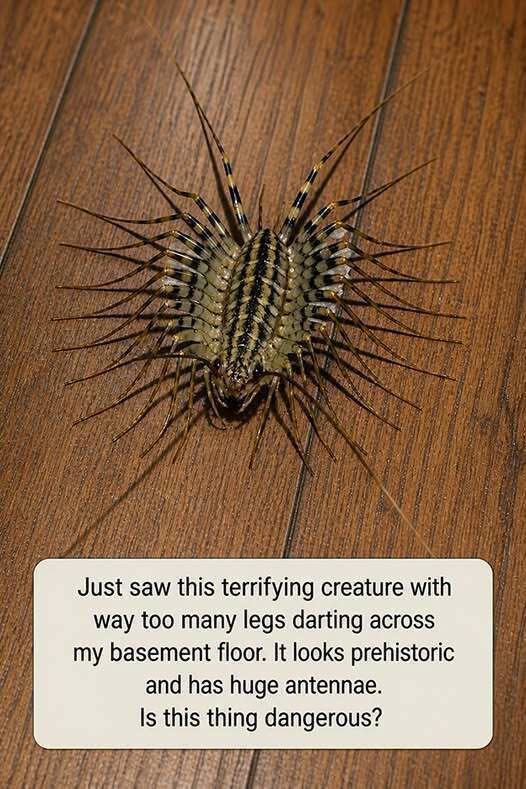
Spotting a fast-moving, many-legged creature darting across your basement floor can be an unsettling experience. Often mistaken for something dangerous, the house centipede is one of the most misunderstood household visitors. While its appearance may be intimidating, this tiny predator is generally harmless to humans and spends its time hunting some of the pests you would much rather not have living in your home.
House centipedes are natural pest controllers that feed on insects such as ants, cockroaches, silverfish, termites, and even spiders. Rather than seeking out people, they actively search for the small insects that hide in dark corners and damp spaces. Although they possess venom to capture their prey, it is intended for insects, and bites involving humans are uncommon and typically cause only minor irritation when they do occur.
If you frequently encounter house centipedes indoors, they may be signaling that your home offers ideal conditions for other pests. Areas with excess moisture—such as basements, bathrooms, laundry rooms, and poorly ventilated spaces—can attract both insects and the centipedes that feed on them. Their presence often points to environmental factors that can be addressed through routine home maintenance.
Simple steps such as reducing indoor humidity, repairing leaks, sealing cracks around doors and windows, and improving ventilation can make your home less inviting to unwanted guests. While house centipedes may never become anyone’s favorite household companion, understanding their role can help replace fear with informed appreciation. Sometimes, the creatures that look the most alarming are quietly helping to keep your home healthier and more pest-free.