
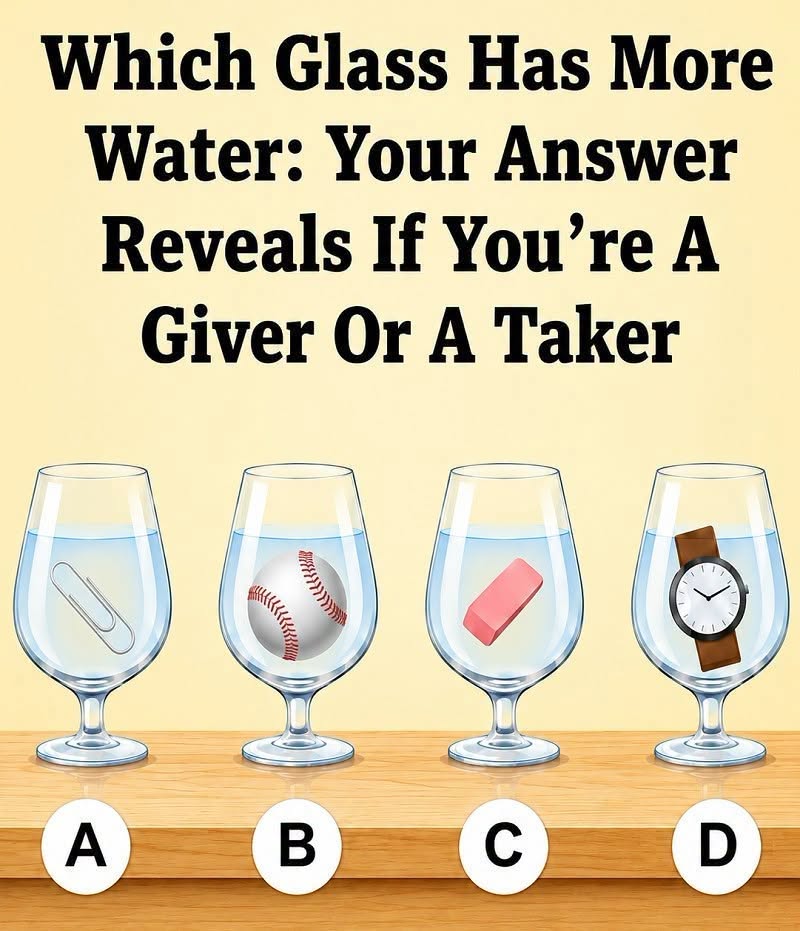
At first glance, the four glasses in this popular visual puzzle appear identical. Each glass is filled to the same level, yet each contains a different object: a paperclip in Glass A, a baseball in Glass B, an eraser in Glass C, and a wristwatch in Glass D. Because the water levels look equal, many people initially assume that each glass contains the same amount of water. The correct answer, however, depends on one important scientific principle.
The key to solving the puzzle is understanding water displacement. Whenever an object is placed into a container of water, it occupies space and displaces some of the liquid. If multiple glasses are filled to the same visible level, the amount of water inside each one will vary depending on the size of the object submerged. Simply put, the larger the object, the less water the glass can actually hold.
Looking at the objects provided, the baseball occupies the greatest volume and therefore displaces the most water. The wristwatch and eraser also take up more space than the smallest object in the puzzle—the paperclip. Because the paperclip requires very little room inside the glass, Glass A contains the greatest amount of water compared with the others.
Beyond providing a fun challenge, puzzles like this encourage critical thinking and careful observation. They remind us that appearances can sometimes be misleading and that small details often make a significant difference. Whether you’re a fan of brain teasers or simply enjoy testing your reasoning skills, this puzzle offers a simple but effective example of how science and logic work together to reveal the correct answer.