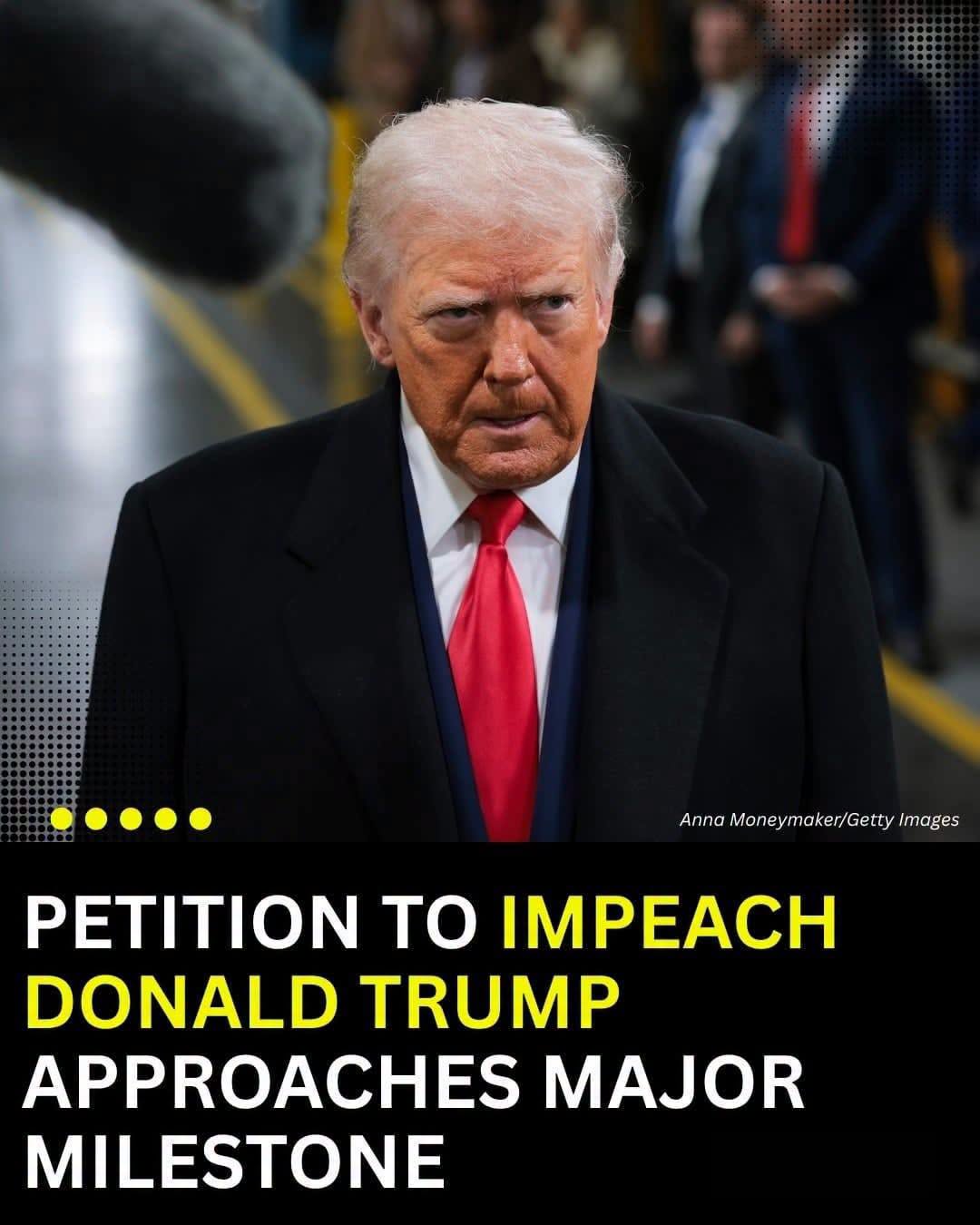
An online petition calling for the impeachment of President Donald Trump has sparked renewed discussion about political accountability and the lasting impact of recent events in American politics. Although petitions do not have the legal authority to initiate constitutional proceedings, supporters view them as a way to publicly express their opinions and encourage continued debate on issues they believe remain important. For many participants, signing the petition represents a symbolic statement rather than a legal action.
Those backing the campaign argue that public engagement is an important part of the democratic process. They believe petitions can highlight concerns, keep political issues in the public conversation, and demonstrate the level of interest surrounding matters of national importance. While the petition itself cannot alter constitutional procedures, supporters see it as an opportunity to voice their perspectives through a peaceful and lawful form of civic participation.
Critics, however, contend that the effort is largely symbolic and unlikely to produce any direct legal or political consequences. Some argue that continuing to revisit past political conflicts may deepen existing divisions rather than encourage constructive dialogue. Others maintain that constitutional mechanisms for impeachment are governed by Congress and cannot be replaced or initiated through online campaigns, regardless of the number of signatures collected.
The differing reactions illustrate the continuing influence of President Trump’s political legacy and the broader national conversation about accountability, public participation, and the role of civic activism. Whether viewed as an expression of democratic engagement or as a symbolic political statement, the petition reflects the ongoing debate over how Americans interpret recent history and the future direction of the country’s political landscape.