
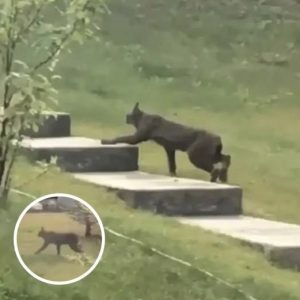
Canadian researchers recently captured something extraordinary on a mobile phone: a Canada lynx with an almost entirely dark coat. This brief recording marked the first documented case of melanism in the species, making it a milestone moment for wildlife science. The unexpected sighting quickly drew attention from researchers and conservationists, who confirmed that no verified record of a melanistic Canada lynx had ever been officially reported before.
Typically, Canada lynx are known for pale gray or reddish-brown fur that helps them blend into snowy northern forests. That camouflage plays a key role in hunting and survival. The dark coloration of this individual challenges long-held assumptions about the species and raises new questions about how genetic traits can occasionally surface, even in animals that have been closely studied for decades. While striking, scientists note that such coloring could be less practical in winter environments where concealment matters.
The discovery has also renewed interest in how genetics and environmental pressures interact in wildlife populations. In some species, darker pigmentation appears more frequently as habitats change, but experts caution against drawing conclusions from a single observation. Still, this rare lynx provides a valuable opportunity to explore how traits emerge, persist, or disappear over time—and how animals may adapt as ecosystems evolve.
Beyond the science, the footage has resonated with the public as a reminder that nature still holds surprises. Even familiar species can reveal unexpected diversity when given space to thrive. Researchers hope the moment will encourage continued wildlife monitoring and conservation efforts, reinforcing the idea that protecting habitats allows not only species to survive, but also rare and remarkable variations to be discovered and understood.