
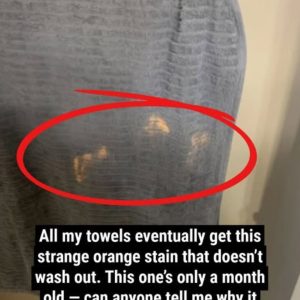
If you’ve noticed pale orange, yellow, or faded patches appearing on your towels, the cause is often hiding in plain sight. One of the most common culprits is benzoyl peroxide, a widely used acne-fighting ingredient found in many face washes, creams, and spot treatments. While effective for skincare, benzoyl peroxide is a powerful oxidizer. When it comes into contact with fabric, it behaves much like bleach, permanently altering the towel’s color.
Understanding how the discoloration happens makes it easier to recognize. On darker towels—such as black, navy, or charcoal—the chemical breaks down the darker dyes first, revealing lighter underlying tones. This reaction often results in orange, pink, or yellow patches rather than pure white spots. A helpful way to tell what you’re dealing with is to look at the color change: if the area is lighter than the rest of the towel, it’s likely bleaching rather than a typical stain.
Once fabric dye has been stripped away, it cannot be restored through washing or scrubbing. That’s why these marks never seem to fade, no matter how many times the towel goes through the laundry. In some cases, leftover product residue can even transfer during washing and affect other items. While benzoyl peroxide is the most frequent cause, it’s worth noting that rust from plumbing or certain bathroom bacteria can also cause discoloration—though those usually appear darker and can often be cleaned away.
Prevention is the easiest solution. Use white towels for your face, especially if you apply acne treatments regularly. Rinse skin thoroughly before drying, and allow products to fully absorb before touching fabrics. If the issue continues, switching to alternatives like salicylic acid may help. Towels that are already discolored don’t have to be thrown out—they can still serve well as cleaning cloths, gym towels, or household rags. With a few small changes, you can protect your towels and avoid future surprises.