
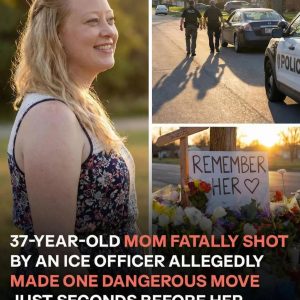
A federal immigration operation in Minneapolis has left the city shaken and searching for answers after a deadly encounter on January 7, 2025. What authorities described as a routine enforcement effort escalated within minutes, ending with the death of a 37-year-old woman and injuries to a federal officer. As official explanations emerged, they were met with grief, skepticism, and a growing demand for transparency from residents who felt the situation raised more questions than it resolved.
According to statements from the Department of Homeland Security, agents with U.S. Immigration and Customs Enforcement were responding to a government vehicle stuck in snow when tensions developed. Officials said a crowd formed, voices were raised, and the scene became unpredictable. Federal accounts maintain that Renee Nicole Good remained in her vehicle and did not follow repeated commands to exit. Authorities further stated that her vehicle was perceived as a threat, prompting an agent to fire his weapon in what was characterized as self-defense. The agent involved was treated for injuries and released later that day.
National figures quickly weighed in, reinforcing the federal government’s position. DHS Secretary Kristi Noem called the outcome tragic while standing by the assertion that the agent followed training and protocol. Former President Donald Trump echoed concerns about the dangers officers face during chaotic encounters, pointing to broader national debates around vehicle-related incidents and law enforcement safety. For many observers, however, the swift defense of the shooting—before an independent investigation was complete—deepened unease rather than easing it.
Within Minneapolis, the response has centered on remembrance and accountability. Vigils near the site of the incident honored Renee Nicole Good as a mother, poet, and community-minded neighbor whose life extended far beyond the circumstances of her death. Local leaders and advocacy groups have called for a transparent, independent review, emphasizing that public trust depends on a full examination of evidence, including witness accounts and video footage. As investigations continue, residents say the path forward must balance patience with persistence—seeking clarity not only to understand what happened, but to affirm the value of a life lost and the responsibility to protect human dignity in moments of crisis.