
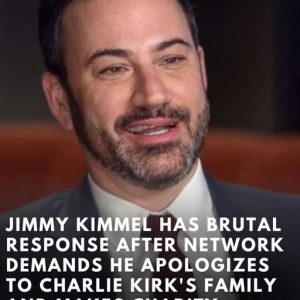
A high-profile dispute has unfolded following comments made by late-night host Jimmy Kimmel, revealing how fragile the balance can be between creative expression and corporate oversight. After backlash over remarks related to the death of conservative activist Charlie Kirk, ABC indefinitely suspended Jimmy Kimmel Live!. Major affiliate owners quickly entered the debate, turning what began as a monologue controversy into a larger standoff over accountability, influence, and editorial control.
The next step in the escalation came from broadcast affiliates themselves. Sinclair Broadcast Group, one of ABC’s largest station owners, demanded a public apology from Kimmel and a personal donation to Kirk’s family and Turning Point USA before agreeing to restore the show. Nexstar Media Group followed suit, removing the program from its stations while citing community standards. These moves sharply reduced the show’s reach even before ABC formally pre-empted the broadcast, underscoring the leverage affiliates hold in shaping what audiences see.
Kimmel’s response added another layer to the conflict. According to reports, he declined to issue an apology or make the requested donation, telling Disney executives he would not comply with the demands. While some media voices framed the situation as a free speech concern, others argued that public figures must consider the impact of their commentary. Sinclair announced plans to air a tribute to Kirk in the vacated time slot, signaling that it views the issue as one of principle rather than programming logistics.
The broader lesson lies in what this moment reveals about modern broadcasting. While networks create content, affiliates ultimately control distribution, giving them significant influence over outcomes when controversy arises. ABC has described the situation as a temporary pre-emption rather than a cancellation, but with affiliates holding firm, the show’s future remains uncertain. The ongoing standoff highlights how editorial freedom, corporate responsibility, and public sensitivity intersect—and how quickly those tensions can reshape the media landscape.