
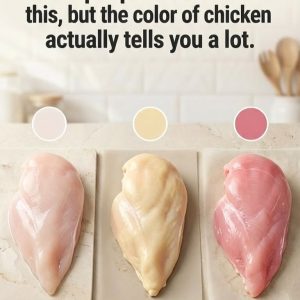
When you’re standing in front of the refrigerated case, it’s easy to let color guide your decision. One package of chicken looks pale and pink, another carries a richer yellow tone, and suddenly you’re wondering if one is healthier, fresher, or raised more carefully than the other. This reaction is natural—our brains rely on visual cues before we ever read a label. But when it comes to chicken, color is only a starting point, not the full story.
The first thing to know is that lighter-colored chicken usually reflects large-scale, efficiency-driven farming. These birds are raised indoors, grow quickly, and eat carefully controlled diets designed for consistency. Limited movement and feed low in natural pigments result in meat that looks paler. This doesn’t mean the chicken is unsafe or lacking nutrition—it simply reflects a system focused on affordability and uniform production rather than traditional growing methods.
Chicken with a deeper yellow hue often comes from birds fed diets containing natural pigments, such as corn or plants rich in carotenoids. More movement, outdoor access, and slower growth can all contribute to this warmer color. Many people associate it with firmer texture and fuller flavor, though color alone doesn’t guarantee how the bird was raised. Some producers even adjust feed specifically to enhance appearance, which is why relying solely on color can be misleading.
The most reliable way to choose chicken is by looking beyond appearance. Labels such as pasture-raised, organic, free-range, or Certified Humane provide clearer insight into diet, living conditions, and animal welfare. Freshness matters just as much—quality chicken should smell clean, feel firm, and avoid excessive liquid in the package. In the end, choosing chicken is about aligning budget, taste, and values. Color may catch your eye, but informed choices come from understanding what truly lies beneath the surface.