
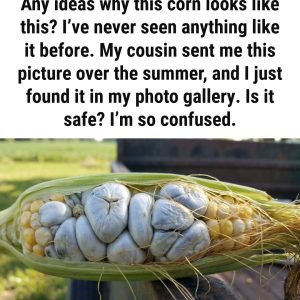
If you grow corn yourself or buy it fresh from a farm stand, you may one day notice swollen, uneven growths where tidy kernels should be. The sight can be alarming, and many people assume the corn has gone bad. In reality, this surprising change is a natural occurrence known as corn smut. While unfamiliar to many shoppers, it is not a sign of spoilage or contamination—it’s a naturally occurring fungus that has been part of corn’s history for generations.
To understand corn smut, it helps to know how it forms. Spores settle on corn plants during warm, moist conditions and often enter through tiny injuries caused by wind, insects, or weather. Instead of developing into regular kernels, the affected areas swell into soft, bulb-like growths that start pale and darken as they mature. This process can happen even in well-tended gardens and farms, making it a normal part of the agricultural ecosystem rather than a farming mistake.
The next question most people ask is whether it’s safe to eat. Corn smut is edible when harvested at the right stage—while it’s still firm, moist, and light in color. At this point, it has a mild aroma and a texture suitable for cooking. Once it becomes dry, powdery, or strongly scented, it should be discarded. Choosing to eat it is a personal preference, but when prepared properly, it poses no health risk and is enjoyed by many around the world.
In fact, in Mexican cuisine, corn smut—known as huitlacoche—is considered a delicacy. Its earthy, mushroom-like flavor is used in tacos, soups, quesadillas, and sauces. Encountering corn smut can be an opportunity rather than a disappointment. Whether you choose to try it or remove it, understanding what it is turns uncertainty into confidence. Sometimes, what looks like a flaw in the field is simply nature offering something unexpected—and potentially delicious.