
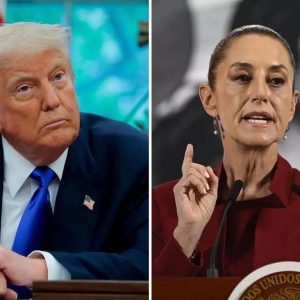
World leaders reacted swiftly after former U.S. President Donald Trump announced that American forces had carried out strikes on three nuclear facilities in Iran, including the Fordo site. Trump described the operation as a “very successful attack,” adding that Iran should now move to end the conflict. The announcement immediately triggered diplomatic responses across multiple regions as governments assessed the potential consequences.
Iran’s foreign minister, Abbas Araghchi, strongly condemned the strikes, calling them a breach of international law and warning that Iran “reserves all options” moving forward. He cautioned that the action could bring “everlasting consequences” and argued that the facilities targeted were part of Iran’s peaceful nuclear program. In contrast, Israel welcomed the move, with Prime Minister Benjamin Netanyahu praising the decision as historic and consistent with what he described as a strategy of “peace through strength.”
China criticized the strikes as a violation of the UN Charter and urged restraint, calling on all parties—particularly Israel—to avoid further escalation. United Nations Secretary-General Antonio Guterres expressed grave concern, warning that the situation could spiral into a wider conflict with severe global consequences. He emphasized that diplomacy remains “the only path forward.” Officials from the European Union echoed that message, urging a return to negotiations while stressing the importance of preventing nuclear proliferation.
Across the Middle East, Saudi Arabia voiced concern about rising regional instability. Groups aligned with Iran, including Hezbollah and Yemen’s Houthis, denounced the U.S. action as aggression. Leaders in the U.K., Japan, Venezuela, and Cuba also called for de-escalation, though with differing perspectives. As governments worldwide continue to evaluate the situation, a shared priority has emerged: preventing a broader regional conflict and steering the crisis back toward diplomatic solutions.