
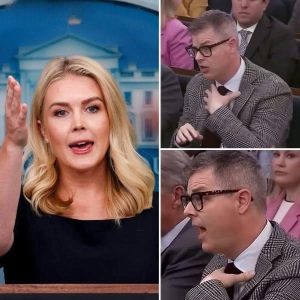
A routine White House press briefing recently escalated into a pointed exchange when Press Secretary Karoline Leavitt fielded sharp questions about President Donald Trump’s proposed tariff plan. An Associated Press reporter suggested the policy could operate as a concealed tax hike for Americans, quickly shifting the tone of the briefing from explanatory to confrontational and highlighting how trade policy often becomes a proxy for broader economic anxieties.
Leavitt pushed back firmly, rejecting the idea that tariffs are designed to burden U.S. households. She framed the policy as a corrective measure aimed squarely at foreign governments and companies that, according to the administration, have long benefited from unfair trade arrangements. In her explanation, tariffs are less about revenue and more about leverage—intended to rebalance trade relationships that have contributed to weakened domestic manufacturing and fragile supply chains.
She acknowledged that importers could face higher costs initially but argued that those pressures are expected to ease as domestic production strengthens. According to Leavitt, the administration’s position is that protecting American industries leads to more resilient supply chains, higher wages, and greater job security over time. When pressed on whether businesses might pass costs along to consumers, she maintained that fair, reciprocal trade would ultimately stabilize prices rather than inflate them.
Leavitt closed by tying the tariff proposal into the administration’s broader economic strategy. She emphasized reducing reliance on foreign markets, insulating the U.S. economy from global shocks, and pairing trade reforms with tax relief focused on wages and retirement income. In that framing, tariffs are presented not as a hidden tax, but as one piece of a long-term plan aimed at sustained growth, stronger domestic industries,