
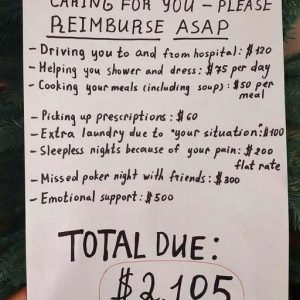
After seven years together, Rachel believed her marriage rested on trust, teamwork, and shared responsibility. Her husband, Daniel, was detail-oriented by nature, and his love of structure had always seemed reassuring. Life felt predictable and secure—until a routine medical procedure took an unexpected turn, leaving Rachel physically drained and emotionally vulnerable. As she focused on recovery, she assumed their partnership would naturally carry them through this difficult chapter.
That assumption cracked one quiet morning when she noticed a handwritten note taped to the refrigerator. It wasn’t a message of encouragement or care—it was a list. Daniel had itemized the “costs” of helping her recover: transportation, meals, time spent assisting her. Each line carried a price, ending with a total that felt less like a number and more like a judgment. The sting wasn’t financial; it was emotional. Support, Rachel realized, had been reframed as a debt.
Rather than reacting with anger, she chose reflection. Rachel began documenting the countless ways she had contributed to their life together over the years—the daily tasks, emotional labor, planning, and quiet sacrifices that never came with invoices. She researched fair values, compiled the list carefully, and let the numbers speak for themselves. It wasn’t about winning an argument; it was about illustrating a truth Daniel had overlooked.
When she finally handed him her envelope, the silence said everything. The total far exceeded his, but Rachel made her point clear: she wasn’t asking for repayment. She was asking for respect. A relationship, she explained, can’t function when love is treated like a transaction. That moment shifted something fundamental. The lists disappeared, and with them, the idea that care could be measured in dollars. It became a reminder that partnership isn’t about keeping score—it’s about showing up, especially when there’s nothing to gain but understanding.