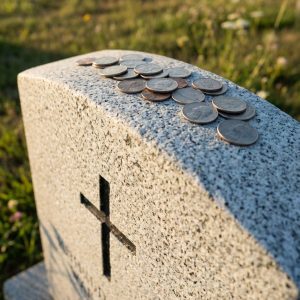
Why Coins Are Left on Gravestones—and What Each One Means

If you’ve ever walked through a cemetery and noticed small coins resting on a headstone, it may have caught your attention. At first glance, they can look like loose change left behind by chance. In truth, those coins are placed with intention and care. They serve as quiet symbols of respect—wordless messages meant to honor a life, a memory, and, in many cases, a shared sense of duty and sacrifice. To those who understand the tradition, even a single coin carries meaning far beyond its value.

This custom is most commonly seen at military graves in the United States and has been passed down through generations of service members. Leaving a coin signals that someone took the time to visit and pay their respects. Each coin tells a different story. A penny simply means remembrance, letting the family know their loved one is not forgotten. A nickel indicates the visitor trained with the person buried there, often during basic training. A dime carries deeper connection, showing that the visitor served alongside them in the same unit.

The quarter holds the most powerful meaning of all. Leaving a quarter signifies that the visitor was present when the service member passed away. It represents shared loss, witness, and a bond formed in an unforgettable moment. Unlike flowers or written notes that fade or are removed, coins remain visible and enduring, quietly marking that someone still remembers long after formal ceremonies have ended.

For families who encounter these coins without knowing their significance, learning the tradition often brings comfort. It confirms that others continue to honor and respect their loved one’s service. Above all, this practice shows that remembrance doesn’t need to be elaborate to be meaningful. A single coin, placed with care, becomes a lasting symbol of gratitude, connection, and respect—proof that no sacrifice is overlooked and no life given in service is forgotten.

Related Posts

How a Tiny Hole in a Safety Pin Solves a Big Everyday Problem

A safety pin looks like one of the simplest tools around—small, inexpensive, and easy to ignore. Most people see it as a quick fix for loose fabric…

How a Simple Thimble Became One of Sewing’s Most Timeless Tools

At first glance, a thimble looks like a modest accessory, but its role in hand sewing is surprisingly important. Designed to protect fingers from repeated needle pressure,…

How I Turned a Gender Reveal Into a Moment of Truth

I never imagined my first pregnancy would lead to the most unforgettable gathering our quiet Maryland neighborhood had ever seen. At 32 and expecting my first child,…

How to Recognize Subtle Shifts in a Relationship Before They Grow

Sometimes a relationship doesn’t change with a bang, but with a quiet sense that something feels off. There’s no single argument or dramatic moment—just a growing awareness…

How a Troubled Childhood Became Part of One of America’s Darkest Crime Stories

At first glance, there was nothing remarkable about the boy who would later shock the nation. With dark eyes, a reserved expression, and a tendency to keep…

How a Singular Voice Turned Teenage Feeling Into Timeless Music

The news settled in quietly, but its weight was unmistakable. A voice that once captured the urgency and vulnerability of youth has gone still, leaving behind a…