
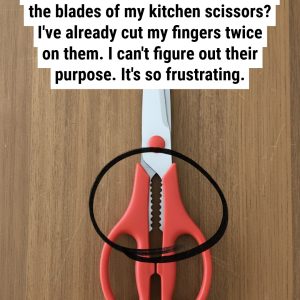
Almost everyone has noticed the small, jagged section tucked between the handles of kitchen scissors and assumed it was decorative or insignificant. It looks harmless, even a little mysterious. In fact, that toothed area is one of the most practical features built into many kitchen shears. It’s not a design quirk—it’s a built-in gripper meant to add extra function without adding clutter.
When the scissors are closed, those teeth interlock to create a firm grip. This allows the tool to hold, twist, or crack items that are tough to manage with bare hands. One of its most useful applications is opening stubborn jar lids. Close the scissors, place the lid into the ridged section, squeeze for traction, and twist. The pressure is evenly distributed, making the task easier and requiring far less hand strength.
That same gripper works well for small bottle caps and tightly sealed containers. It can also act as a simple nutcracker—just place a nut between the teeth and apply slow, controlled pressure until the shell breaks. Some heavy-duty kitchen shears can even handle small poultry bones using this feature, though it’s important to use only scissors designed for food prep to avoid damage or injury.
Beyond these uses, the toothed section can grip slippery plastic caps, help crack shellfish, twist stubborn seals, or steady items that won’t stay put. It’s a subtle example of thoughtful kitchen design—one that saves space while increasing versatility. The next time you reach for your scissors, take a closer look. That small ridged detail isn’t decorative at all—it’s a quiet helper waiting to make everyday tasks easier.