
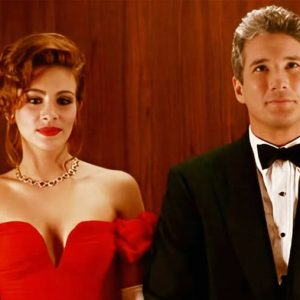
Released in 1990, Pretty Woman became far more than a box-office hit—it evolved into a defining cultural moment. The film propelled Julia Roberts and Richard Gere into enduring stardom and delivered a modern romance audiences still revisit decades later. Yet its origins were far removed from fairy-tale fantasy. The original script, titled 3,000, was conceived as a bleak drama centered on class divides and exploitation. Only after The Walt Disney Company became involved did the story transform into the polished Cinderella-inspired romance that defined an era.
Even with its glossy finish, the final cut is sprinkled with small continuity slip-ups that sharp-eyed fans love to spot. Vivian’s breakfast pastry famously changes from a croissant to a pancake mid-scene, Edward’s tie shifts between shots, and props like shoes, cash, and even condoms appear and disappear without explanation. Rather than detracting from the film, these quirks have become part of its charm—proof that even Hollywood perfection has human fingerprints.
Some of the movie’s most memorable moments came from spontaneity rather than planning. Roberts’ infectious laugh during the jewelry box scene wasn’t scripted, nor was Gere’s piano performance in the hotel. Costume design played an equally important role in storytelling: Vivian’s red opera gown marked her emotional transformation, while Edward’s tailored suits reinforced his reserved, controlled worldview. Every visual choice subtly supported the characters’ arcs.
What ultimately elevates Pretty Woman beyond its flaws and revisions is the unmistakable chemistry between its leads. Roberts and Gere’s natural connection carried the story, grounding its fantasy in emotional truth. More than a love story, the film remains a reflection on self-worth, empathy, and change—reminding audiences that even the most polished fairy tales are made memorable by a little imperfection.