
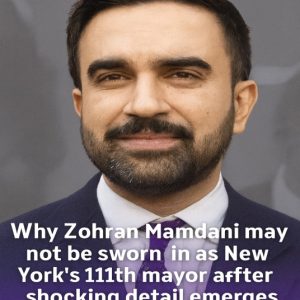
Zohran Mamdani’s election as mayor of New York City drew national attention for several reasons, but none more significant than the historic nature of his victory. At just 34 years old, he became the city’s first Muslim mayor and the first leader of South Asian heritage — a milestone many viewed as a reflection of New York’s increasingly diverse identity. As anticipation built for his January 2026 inauguration, an unexpected twist emerged from the archives, adding a surprising footnote to an already notable moment.
Historian Paul Hortenstine uncovered a long-overlooked clerical error dating back to the seventeenth century. According to his research, Matthias Nicolls — one of the city’s earliest mayors — had served two separate terms in the 1670s. The second term was never recorded independently, which meant the official sequence of mayors had been off by one for generations. Although the oversight had been mentioned in small academic circles before, no administration had ever officially corrected the numbering.
The revelation sparked lively discussions among historians, city agencies, and longtime residents. Supporters of updating the records argued that accuracy should matter, even when correcting a centuries-old mistake. Others worried that renumbering every mayor retroactively could create unnecessary confusion in public documents, textbooks, and historical plaques. The debate illustrated the tension between preserving tradition and refining the historical record.
Despite the headlines, the numbering discrepancy had no effect on Mamdani’s role, authority, or agenda. He remained focused on the issues that shaped his campaign — housing affordability, infrastructure improvements, economic recovery, and greater representation. Whether his title lists him as the 111th or the 112th mayor, the expectations surrounding his administration remain the same, and the rediscovered error stands as a quirky but memorable detail in an otherwise forward-looking moment for New York City.