
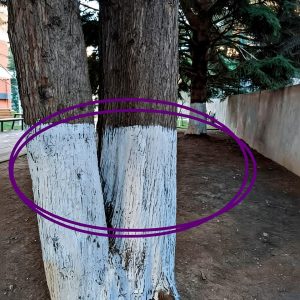
Many people notice trees with bright white trunks and assume the paint is meant to decorate or draw attention. In reality, this practice is a practical form of protection used by gardeners, homeowners, and arborists. To understand its value, start by recognizing the stress young trees face during winter. Sudden temperature shifts can damage bark, and applying white paint offers a simple yet effective way to shield the tree from seasonal harm.
The next step is understanding what the paint actually prevents. During sunny winter days, a tree’s bark warms and expands, only to contract quickly as temperatures drop at night. This rapid change can cause sunscald—cracks or splits that leave the trunk vulnerable to disease and pests. Unlike orange or purple markings that communicate property boundaries or removal plans, white paint serves a completely different purpose: it reflects sunlight to keep the bark’s temperature more stable.
To protect trees properly, caretakers use a diluted water-based latex paint. Mixing equal parts paint and water creates a thin coating that spreads easily and allows the bark to breathe. For most homeowners, a simple brush works best, while orchards and farms often rely on sprayers to cover large areas efficiently. Applying the mixture evenly from the base of the trunk to just below the first branches provides the right level of coverage.
Maintaining painted bark is straightforward. Most trees benefit from one application each year, usually in late fall, to stay protected through winter and early spring. Checking the trunk occasionally for peeling paint or exposed areas can ensure continued protection. By using this small but thoughtful method, you help young trees withstand harsh weather and thrive long term—proof that sometimes the simplest solutions offer the strongest support for the natural world.