
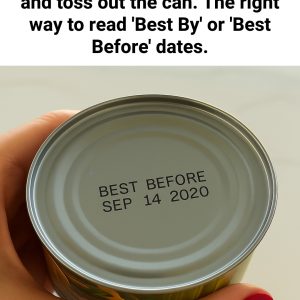
Many households have at least one forgotten can of soup, beans, or vegetables tucked behind newer groceries. When people finally notice the date printed on the label has passed, the instinct is often to toss it out immediately — but that isn’t always necessary. In reality, many dates on canned goods focus on quality rather than strict safety. Phrases such as “Best By” and “Best Before” simply indicate when the product is expected to taste its freshest, not when it becomes unsafe.
“Use By” dates can feel more serious, but even those are typically recommendations from manufacturers about peak flavor and texture, especially for perishable items. When it comes to canned foods, proper storage plays a bigger role in safety than the printed date. If cans are kept in a cool, dry space and protected from heat or moisture, they can last far beyond what the label suggests. High-acid foods like tomatoes or fruit tend to keep their best taste for about a year, while low-acid items such as beans, corn, or canned meats can stay in good condition for several years. According to the USDA, an undamaged can may remain safe indefinitely, though its flavor may gradually decline.
There are, however, moments when caution is essential. Certain signs indicate a can should never be opened or eaten: bulging or swollen ends, rust, deep dents near seams, leaking, foul smells, or liquid that sprays when the can is punctured. Any of these warning signals point to possible contamination or bacterial growth, making the contents unsafe. Whenever a can looks suspicious, it’s best to discard it immediately.
Knowing how canned food storage truly works can help families reduce waste and stretch their grocery budgets. Instead of throwing away every expired can on sight, take a moment to look it over carefully. If the can is intact and the food inside appears normal, it may still be perfectly usable. A little awareness goes a long way in maintaining a well-organized pantry — and in preventing good food from being unnecessarily discarded.