
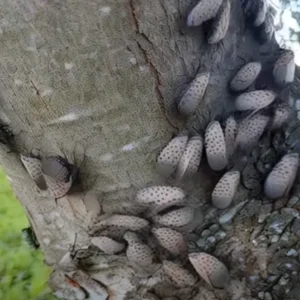
Take a closer look at your backyard — especially if you live in the eastern or midwestern United States. What might seem like just another colorful insect could actually be one of America’s most destructive newcomers: the spotted lanternfly (Lycorma delicatula). With its speckled wings and graceful leaps, this creature appears almost charming, but beneath that beauty lies a serious threat. Feeding on the sap of more than 70 plant species, the lanternfly drains trees, vines, and crops of essential nutrients, leaving behind widespread ecological and economic damage. First discovered in Pennsylvania in 2014, it has since spread through multiple states, endangering vineyards, orchards, and native forests alike.
Despite its name, the spotted lanternfly isn’t a fly at all. It’s a planthopper — an invasive species originally from China, India, and Vietnam. Likely introduced through imported goods, it found perfect conditions to thrive across the U.S.: mild seasons, plentiful host plants, and few natural enemies. Adult lanternflies are easy to spot, with gray wings patterned in black dots and striking red underwings that flash mid-hop. The younger nymphs, black with white or red speckles, move like tiny bursts of ink. As they feed, they excrete a sticky substance called honeydew that coats leaves, patios, and vehicles — encouraging black mold growth and attracting other pests.
The impact extends far beyond cosmetic damage. Farmers have reported weakened fruit trees, declining grape yields, and entire stands of timber under stress. But there are effective ways to help contain the invasion. If you encounter a lanternfly, experts recommend destroying it immediately — a firm stomp or a scrape into a bag filled with rubbing alcohol or hand sanitizer does the job. Check tree trunks for egg masses resembling gray smudges, and wrap trees with sticky bands to capture nymphs, making sure to cover the adhesive with mesh to protect birds and small animals. For persistent infestations, use insecticidal soaps or EPA-approved sprays according to label directions.
Vigilance is your best defense. Before traveling or moving outdoor materials such as firewood, planters, or furniture, inspect them carefully for hidden eggs. Report any sightings to your local agricultural office to help track and contain outbreaks. The goal isn’t panic but participation — each small act of awareness contributes to a larger effort to protect our ecosystems. The spotted lanternfly may have arrived uninvited, but by staying observant and proactive, we can