
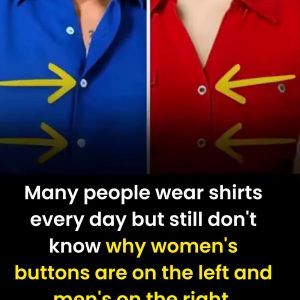
If you’ve ever struggled to button a shirt and realized men’s and women’s buttons are reversed, you’ve stumbled upon a small but meaningful piece of history. The difference isn’t a random design quirk — it’s a reflection of centuries-old habits shaped by class, gender roles, and practicality. In the 18th and 19th centuries, upper-class women rarely dressed themselves; that task belonged to their maids. Because most people were right-handed, tailors placed women’s buttons on the left to make dressing easier for the maid standing opposite her employer.
What began as a matter of convenience soon became a silent marker of refinement and social standing. Left-side buttons came to symbolize gentility and femininity, a subtle reminder of the era’s class distinctions. Even after the tradition of household staff faded, the design detail endured, passed from generation to generation as part of fashion’s inherited language. Every blouse and dress fastened from the left still carries a faint echo of that bygone world — one where luxury was measured by how much help you had getting dressed.
Men’s fashion, on the other hand, evolved from function rather than formality. Right-handed men in earlier centuries often carried weapons on their left side. Placing buttons on the right made it easier to draw a sword or firearm quickly without interference from the garment. What started as a military practicality eventually spread to everyday clothing, becoming the standard we still see on men’s shirts and jackets today.
Though the original reasons have long faded, the tradition remains — a small yet fascinating reminder of how deeply history shapes the ordinary. That simple detail on your shirt speaks volumes about the past: about class, gender, and how practicality once dictated style. What was once a sign of etiquette and readiness has become a charming thread linking modern wardrobes to centuries of social evolution.