
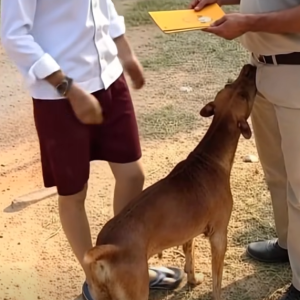
If you’ve ever been greeted by a dog with an enthusiastic sniff—sometimes a little closer than you’d expect—you’re definitely not alone. While humans connect through words, tone, and eye contact, dogs communicate through scent. To them, every person carries a unique aroma that tells a complete story: where you’ve been, what you’ve touched, even how you feel. For a dog, sniffing isn’t rude—it’s their way of saying hello and gathering the details that words could never provide.
Dogs have an extraordinary sense of smell, one that far surpasses human capability. With nearly 300 million scent receptors in their noses (compared to just six million in ours), they can detect layers of information invisible to us. That’s why trained service dogs can alert their owners to medical issues like low blood sugar, anxiety, or seizures before symptoms appear. To them, every breath of air is filled with data—emotions, chemistry, and history—all interpreted through a skill nature perfected over thousands of years.
You might notice that dogs often go straight for certain areas, like the groin or underarms, during greetings. While it can feel awkward, it’s purely biological. Those spots contain sweat glands that release pheromones—chemical signals carrying clues about a person’s identity, mood, and even health. When dogs meet each other, they sniff near the tail for similar reasons. When they do it to humans, they’re simply following instinct, gathering information the same way they would with another dog.
If your dog’s greeting feels a bit too personal, gentle redirection can help. Trainers often recommend teaching dogs to “say hello” by sniffing an offered hand instead, allowing them to satisfy their curiosity respectfully. The key is understanding that this behavior isn’t mischief—it’s communication. Through scent, dogs learn trust, form bonds, and deepen their connection with us. To a dog, every sniff says something simple and sincere: “I want to know you.”