
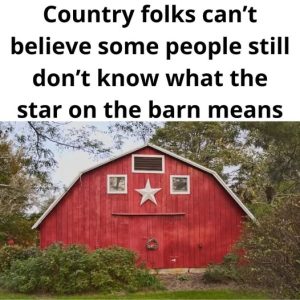
If you’ve ever driven through the countryside and noticed a large, five-pointed star hanging on a barn or farmhouse, you’ve likely passed a piece of living history. These weathered stars, often gleaming against old wooden boards or faded paint, are more than simple décor. Known as barn stars or hex signs, they carry generations of meaning — symbols of protection, pride, and the quiet spirituality that has long defined rural America.
The tradition dates back to the 18th and 19th centuries, when Pennsylvania Dutch farmers — descendants of early German settlers — began painting or mounting stars on their barns. Each one was thought to bring good fortune and safeguard the farm, animals, and family who lived there. Every color held its own significance: red for luck and passion, blue for peace and harmony, green for growth and fertility, black for strength and protection, and white for purity and faith. Many designs blended geometric and spiritual elements, forming intricate patterns that reflected both artistry and belief.
Over time, the stars also came to represent craftsmanship and community identity. Families often created their own versions, incorporating initials, dates, or local motifs to make each design uniquely theirs. For many, the barn star became a quiet emblem of belonging — a way to mark a family’s story and pride in their land. As the years passed, the tradition spread across regions, evolving from a folk symbol into a beloved part of Americana.
Today, barn stars adorn not only barns but homes, gardens, and porches far beyond their Pennsylvania origins. While most people now display them as rustic decoration, their spirit remains the same — a reminder of resilience, good fortune, and connection to the land. The next time you see one, take a moment to appreciate what it represents: generations of hope, hard work, and the enduring beauty of simple traditions that continue to shine.