
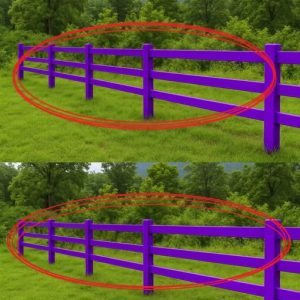
Have you ever come across a purple fence or a streak of violet paint on a tree while walking through the countryside? It might look like an artistic touch, but it actually serves a very practical purpose. In many parts of the United States, purple paint isn’t just decoration — it’s a legal way to mark private property. Known as the “purple paint law,” it’s used to signal no trespassing without the need for traditional signs.
The color was chosen for a reason: it’s bold, easily visible in nature, and less likely to fade or blend into surroundings than standard markers. Some states have clear guidelines for how this paint should be applied. The stripes are usually vertical, about one inch wide and eight inches long, and placed 3–5 feet off the ground — high enough to be seen above tall grass or brush. The marks are often repeated every hundred feet along property lines to ensure clarity.
Not every state recognizes purple paint as a legal boundary, so landowners are encouraged to check local laws before using it. Where it is recognized, it provides a cost-effective and low-maintenance way to protect property lines. Unlike metal or plastic signs, paint can’t easily be stolen, damaged, or blown away by weather, making it both reliable and discreet.
So, the next time you notice a purple stripe on a fencepost or tree, know that it’s more than just an interesting color choice. It’s a quiet but powerful message — a legally accepted way of saying “private property.” That single stroke of color carries meaning, reminding passersby to respect boundaries while showcasing one of the simplest forms of communication in rural life.