
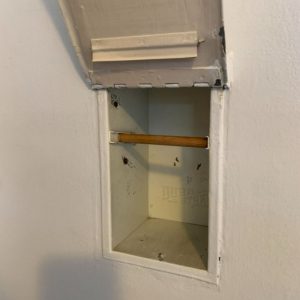
Older homes often hold small architectural mysteries — features that puzzle modern homeowners yet once served practical, everyday purposes. A recent discovery inside a 1935 Southern California home revealed one such curiosity: a recessed wall compartment in the kitchen, positioned about five feet off the ground, complete with a small upward-swinging door. To the untrained eye, it could pass for a spice shelf, a compact dumbwaiter, or an oddly placed cupboard. But history offers a more fascinating explanation.
During the 1930s, kitchen design emphasized space-saving efficiency, particularly in growing California neighborhoods. Many homes featured built-in ironing board cabinets that folded neatly into the wall when not in use. These compact designs allowed homeowners to press aprons, linens, or smaller garments without taking up precious floor space. The shape and height of the compartment — along with its lift-up door — fit the description perfectly. Another plausible use was as a niche for early electric appliances, such as toasters or mixers, which could be conveniently stored yet kept off the main counters.
These clever built-ins reflected the ingenuity of early 20th-century homemakers and designers. Keeping appliances tucked away not only freed up workspace but also contributed to the clean, uncluttered look that defined 1930s kitchens. Innovations like these were subtle yet forward-thinking — a balance between functionality and aesthetic charm. They reveal how home design evolved alongside the technology and habits of daily life.
By the 1950s, such wall features gradually disappeared, replaced by portable ironing boards and larger kitchen layouts. Yet, when one of these hidden compartments turns up today, it’s more than just an oddity — it’s a small piece of design history. Before covering or removing it, take a closer look. You might be looking at a preserved relic of 1930s ingenuity, a quiet reminder that practicality and creativity have always gone hand in hand in the heart of the home.