
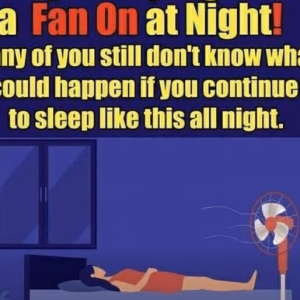
For many people, especially during warmer nights, sleeping with a fan feels like an easy way to stay cool. However, for older adults, direct airflow throughout the night may bring more discomfort than relief. As we age, our bodies become more sensitive to temperature changes and environmental factors that can quietly influence rest and well-being.
Continuous air blowing toward the face or body can cause dryness in the eyes, throat, and nasal passages. Because aging skin and mucous membranes are naturally more delicate, this dryness may lead to irritation, mild sinus pressure, or even minor nosebleeds. Some individuals also experience morning stiffness or neck tension when cool air settles on muscles overnight, particularly if they already have arthritis or muscle sensitivity.
In some cases, strong airflow can also irritate the respiratory system. Those with asthma, allergies, or chronic respiratory conditions may find that a direct breeze makes it harder to breathe comfortably, especially in dry environments. While the gentle hum of a fan can help many fall asleep, its cooling effect may sometimes disrupt body temperature regulation, leading to restless or fragmented sleep.
The solution isn’t to avoid fans altogether, but to use them wisely. Position the fan away from your face, choose an oscillating setting to circulate air evenly, and consider adding a humidifier to maintain moisture in the room. A few small adjustments can make all the difference—keeping the air fresh and comfortable while protecting your health and ensuring a better night’s rest.