
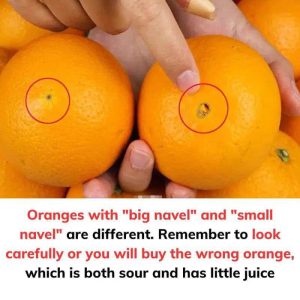
The Distinction Between Large and Small Navel Oranges
When selecting oranges, take a moment to examine each fruit’s navel. Some oranges feature a large, round navel with a prominent indentation, while others may only show a small dot.
In terms of quality, large navel oranges and small navel oranges differ significantly. Cutting into a large navel orange reveals a navel covered in a white membrane, with few segments inside, mostly consisting of peel, and a less appealing flavor. Typically, the segments of these oranges lack sweetness and contain less juice than expected.
On the other hand, small navel oranges have a less defined navel, a thinner peel, and their segments are juicier and sweeter. The key differences between large and small navel oranges lie in their sweetness and juice content. When purchasing oranges, take note of the navel to ensure you select the finest fruits.
Tips for Choosing Tasty Oranges
In addition to examining the navel, consider other factors when buying oranges to find the most delicious options.
Color
The vibrant orange hue is the first thing that grabs our attention at the orange display, but a closer look reveals a variety of shades among oranges. Generally, the same type of orange will be sweeter and juicier if it has a darker color, as this indicates it has received more sunlight and accumulated more sugar. These are the ones you should go for.
Shape
When selecting oranges, you might notice a range of shapes, from slightly oval to perfectly round, and even some that are plump or have a rough, wrinkled surface. For the tastiest experience, opt for the round oranges, as they tend to be the juiciest and sweetest.
Feel by hand
It’s a good idea to pick up the orange and gauge its weight, as a larger fruit isn’t always heavier. Sometimes, they can have thick peels and dry sections inside. A heavier orange usually indicates freshness and juiciness, while a lighter one suggests it has been stored for a while and may not taste as good. Additionally, feeling the texture can help; fresh, ripe oranges will have a bit of give when you squeeze them, while those that are hard may have tough skin and lack flavor.