
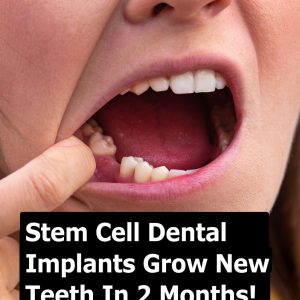
Losing a tooth is a source of major pain, and it also comes with a lot of issues and long-term discomforts. Dentures are one way to replace a lost or bad tooth, but they come with a lot of burdens on their own. A new dental replacement procedure is in the works, and it could be a whole lot better than getting regular dentures or standard implants: Stem Cell Dental Implants. (1)
It takes a while to get used to having teeth you were not born with, and some people’s gums and jawbones are just not suitable to receive dentures and other traditional implants. Some people have bad anxiety regarding dental procedures, and there are conditions that prevent some from receiving dentures. There are also many drawbacks to traditional dentures, including (2):
Scientists have developed a new procedure for tooth replacement known as stem cell dental implants. According to a study that was published in the Journal of Dental Research, it could now be possible to regenerate your own teeth through stem cell stimulation. Dr. Jeremy Mao, a Professor of Dental Medicine at Columbia University Medical Research Center spearheaded the research.
What Are Dental Stem Cells?
Stem cells are those that help to create all of the organs and systems in your body that make you, well, a functioning human being. They are capable of changing every cell in your body and are found in most of your tissues. They not only help to create your body but also to replenish it. (3)
Researchers found that our teeth contain a wealth of stem cells. They are found in both baby and adult teeth and have the ability to completely regenerate themselves. What’s better, dental stem cells are highly compatible with the body’s immune system. This means your body is less likely to reject them, making them a viable option for treating many conditions. In dentistry, they may be able to assist in healing certain aspects of the teeth before surgical intervention is required. For example, they could help to heal a cavity before a root canal is necessary. Scientists are also studying how to use them to regrow teeth rather than giving people traditional dentures. (4)
How do these stem cell dental implants actually work?
To begin, a growth-factor-infused 3D scaffolding is implanted into the area of the missing tooth, which then stimulates your body’s own stem cells to migrate to the area. In turn, this will stimulate the regeneration of an anatomically perfect tooth. What’s even more amazing is that this process only takes around two months. (5)
What’s unique about this, is that it harnesses the body’s own resources. There is no need for stem cell harvesting or for anything to be grown outside of the body (i.e. in a petri dish). In the paper, Dr. Mao stated his motivation for this research.
“Key consideration in tooth regeneration is finding a cost-effective approach that can translate into therapies for patients who cannot afford or who are not suitable candidates for dental implants. Cell-homing-based tooth regeneration may provide a distinct pathway toward clinical translation.”
How will the public take this?
This technique also allows you to recover more quickly than traditional implants would. Despite all the aforementioned endearing advantages, this method may have a hard time gaining public acceptance, however, education is key.
While many people are ethically opposed to medical procedures involving the use of stem cells, it is important to understand that the stem cells used are from our own bodies. This new process is completely natural and undergoes no form of manipulation.
The University of Columbia has already completed the process of a patent application for this new medical technology. While the research is in its early stages, it will continue with Dr. Mao, to improve this new technique and to eventually have it available to the general public.
Finally, Dr. Ira B. Lamster, dean of the College of Dental Medicine, seems optimistic stating that,
“This research provides an example of what is achievable when today’s biology is applied to common clinical problems. Dr. Mao’s research is a look into the future of dental medicine.”