
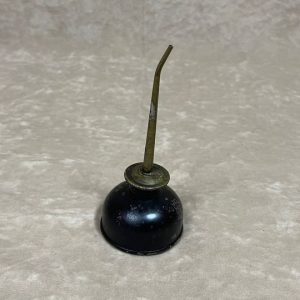
Vintage oil cans, essential in automotive and mechanical maintenance, appeared in the late 19th and early 20th centuries. As automobiles and machinery grew in popularity, the need for effective oil dispensing and storage led to the development of these robust and often intricately designed cans. Made initially from tin or steel, they featured a straightforward yet functional design with a precise spout and a user-friendly handle. Some models included decorative elements, showcasing the craftsmanship of the time.
Vintage oil cans served mainly to dispense and store lubricating oils for engines and machinery. Their design enabled users to pour oil directly into engines, gearboxes, and other parts needing lubrication. Typically, these cans had a long, slender spout to reach tight spaces and reduce spills. Many also featured a removable cap or lid to prevent oil contamination and evaporation.
These cans were usually hand-operated, requiring manual tilting or pouring. Beyond their practical use, some vintage oil cans were crafted to be visually appealing, with embossed logos, decorative patterns, and vibrant finishes. They were common in garages, workshops, and homes, highlighting the era’s focus on both function and aesthetics.
The legacy of the vintage oil can extends beyond its practical application. These cans represent the ingenuity and craftsmanship of their time. Today, collectors and enthusiasts value them for their historical significance and unique designs. Vintage oil cans are now iconic artifacts, displayed in museums, antique shops, and private collections.
Their influence persists in modern designs, where the principles of vintage oil cans continue to inspire contemporary tools and containers. The enduring appeal of these cans underscores their role in the evolution of automotive and mechanical technology and their place in cultural and industrial history.
In summary, vintage oil cans are more than functional objects—they are nostalgic reminders of an era when craftsmanship and detail mattered. Their history, usage, and legacy continue to attract those who appreciate the blend of form and function in industrial design.