
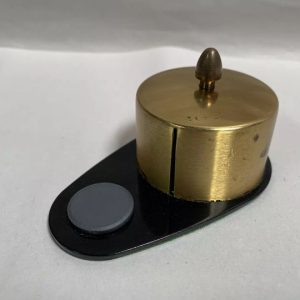
The vintage brass desktop postage stamp roll dispenser is a charming relic from a bygone era, reflecting a time when handwritten correspondence was a primary means of communication. These dispensers, often crafted from solid brass, were popular during the late 19th and early 20th centuries. They became essential office accessories, especially in businesses and homes where managing a steady flow of mail was necessary.
History
The origin of the brass stamp roll dispenser dates back to the period when postage stamps were sold in rolls rather than sheets. As the use of postage stamps became more widespread in the late 1800s, the need for a convenient way to store and dispense these stamps arose. The brass stamp dispenser was developed as an elegant solution, offering both functionality and a touch of sophistication to any desk.
These dispensers were typically made by skilled craftsmen, often featuring intricate designs and engravings. The use of brass was not just for its durability but also for its aesthetic appeal, giving the dispenser a weighty, luxurious feel. Over time, these items became popular gifts and collectibles, symbolizing both the practicality and elegance of the era.
Usage
The primary function of the brass desktop postage stamp roll dispenser was to store and neatly dispense a roll of postage stamps. The dispenser usually featured a small slit or opening through which the stamps could be fed and torn off one at a time. This made it easier to handle stamps, especially when mailing large volumes of letters or packages.
To use the dispenser, one would simply place a roll of stamps inside the device, feed the edge of the roll through the opening, and pull out a single stamp as needed. The weight of the brass ensured the dispenser remained stable on the desk, allowing for easy, one-handed operation. Some models also included a cutter or serrated edge, which made tearing off stamps even more convenient.
Legacy
While the brass desktop postage stamp roll dispenser is no longer a common office accessory, its legacy endures as a symbol of a more deliberate and personal era of communication. In the age of digital correspondence, these dispensers evoke nostalgia for a time when writing and sending letters was a thoughtful, hands-on process.
Today, these vintage dispensers are highly sought after by collectors of antique office supplies and postal memorabilia. Their craftsmanship and historical significance make them valuable pieces, often displayed as decorative items in homes and offices. The brass desktop postage stamp roll dispenser serves as a reminder of the elegance and attention to detail that characterized the everyday objects of the past.